5/17/2023

GoPro Hero 10 Black vs Hero 11 Black

  GoPro Hero 10 Black vs Hero 11 Black

GoPro Hero 10 Black vs Hero 11 Black: Which Should You Buy?

The GoPro Hero 10 Black and Hero 11 Black are the company's latest flagship action cameras. But which one is right for you - the Hero 10 or Hero 11?

In this article we'll compare:gpu temperature

• Design and build quality
• Display options
• Video recording specs
• Photo specs
• Features and advanced options
• Water resistance
• Image stabilization
• Battery life
• Performance upgrades
• Pricing and value

Design

• Hero 10 Black - Same tried and true design as previous GoPro models with a rectangular bar shape. Waterproof down to 33 feet without a housing.

• Hero 11 Black - Similar design to Hero 10 but slightly smaller and lighter. Now waterproof down to 16 feet without a housing.

Display

• Hero 10 Black - Features the same 2-inch front color display as previous models. Screen is non-removable and non-touch.

• Hero 11 Black - Also has a similar 2-inch front display that is non-touch and non-removable. No major changes from Hero 10.

Video Recording

• Hero 10 Black - Shoots up to 5.3K60 video, 4K120 video and 2.7K240 slow motion. Also supports 1080p240.

• Hero 11 Black - Also capable of 5.3K60 and 4K120 video recording. But now features new 8:7 aspect ratio presets.

Photos

• Hero 10 Black - Shoots 27MP photos and supports burst mode photos up to 30FPS.

• Hero 11 Black - Also shoots 27MP photos with up to 30FPS burst mode. No upgrades in still image capture.

Features

• Hero 10 Black - Includes standard GoPro features like portrait orientation mode, super photo, scheduled capture and live streaming.

• Hero 11 Black - Adds a new Hypersmooth 5.0 video stabilization and new "GeoFilter" location-based presets. But drops 3D Photo mode.

Water Resistance

• Hero 10 Black - Rated for water resistance up to 33 feet without a housing.

• Hero 11 Black - Increased water resistance up to 16 feet without a housing. A noticeable downgrade from Hero 10.

Image Stabilization

• Hero 10 Black - Features GoPro's HyperSmooth 4.0 video stabilization for smooth shake-free video.

• Hero 11 Black - Includes an updated HyperSmooth 5.0 stabilization claiming "50% more stable" low-light performance.

Battery Life

• Hero 10 Black - Rated for up to 1 hour 20 minutes of 5.3K30 video recording.

• Hero 11 Black - GoPro claims up to 20% longer battery life versus Hero 10. Rated for up to 1 hour 30 minutes of 5.3K30 recording.

Performance Upgrades

• Hero 10 Black - Features GoPro's GP1 processor for improved image processing capabilities.

• Hero 11 Black - Now uses an updated GP2 processor claiming better low-light performance, HyperSmooth 5.0 and RAW photo options.

Pricing

• Hero 10 Black - Launched at $399 but often found on sale around $349 or lower now.

• Hero 11 Black - Retails for $399 but currently on sale for $349, the same launch price as Hero 10.

So in summary, the GoPro Hero 11 Black mostly offers small refinements over the Hero 10 in key areas like processor performance, image stabilization and battery life. However, it takes a step back in water resistance - only being rated for half the depth of Hero 10. And video/photo recording specs remain essentially identical.como apagar la computadora con el teclado

For most users, the Hero 10 Black currently represents a better value since it's priced similarly but offers greater waterproofing for adventurous shooting. But aspiring filmmakers who want the absolute best GP2 processor performance for low-light and stabilization may prefer the Hero 11. Just keep in mind the water resistance tradeoff.

Hopefully this comparison has helped you decide between the GoPro Hero 10 Black and Hero 11 Black! Let me know if you have any other questions.

Comparing exFAT vs FAT32

Comparing exFAT vs FAT32

exFAT vs FAT32: Which File System Should You Use?

When formatting storage devices like USB drives, SD cards and hard drives, you'll often have the choice between using the FAT32 or exFAT file systems. But which one should you choose?gpu temperature

In this article, we'll compare:

• What FAT32 and exFAT are
• File size limits
• Compatibility between devices
• Supported features
• Performance
• Security considerations
• Use cases for each file system
• Things to keep in mind when choosing FAT32 vs exFAT

What Are FAT32 and exFAT?

• FAT32: Stands for File Allocation Table 32-bit.

  • It's an older legacy file system designed by Microsoft in the 90s for flash drives and memory cards.

  • Implements a 32-bit cluster number, limiting individual file sizes.

  • Widely compatible with most devices and operating systems.

• exFAT: Short for "extended FAT".

  • A newer file system designed by Microsoft as a replacement for FAT32.

  • Implements a 64-bit cluster number, removing individual file size limits.

  • Has some improved features over FAT32 but less compatibility.

  • Pronounced "ex-fat".

File Size Limits

• FAT32:

  • Maximum individual file size is capped at 4GB.

  • Total storage size limit is roughly 2TB.

  • These limits are due to FAT32's use of a 32-bit cluster numbering system.

• exFAT:

  • Individual files can be any size, as exFAT uses a 64-bit cluster number.

  • Total storage size limit is theoretically 128ZB (zettabytes).

  • Has no practical limits on file or storage capacities.

Device Compatibility

• FAT32:

  • Supported natively by Windows, macOS, Linux and most mobile devices.

  • Universal compatibility makes it an ideal common format for max compatibility.

• exFAT:

  • Only natively supported by recent versions of Windows and some newer Android devices.

  • May require additional drivers or app support for use with macOS and Linux.

  • Some older devices lack exFAT compatibility entirely.

  • Not an option for the broadest compatibility across all systems.como apagar la computadora con el teclado

Supported Features

• FAT32:

  • Supports basic features like files, folders, shortcuts and file attributes.

  • Supports long filenames up to 255 characters.

  • No advanced security features beyond basic file attributes.

• exFAT:

  • Supports all the basic features of FAT32.

  • Adds optional support for file compressionfaster file allocation and wearing leveling.

  • Can support file system spanning across multiple physical disks.

  • Includes basic security features like file permissions and encryption.

Performance

• FAT32:

  • Performance is average, optimized for simple storage rather than speed.

  • Limited by 32-bit architecture and multi-tasking limitations of FAT.

• exFAT:

  • Faster performance due to optimizations for flash storage and 64-bit architecture.

  • Supports file system journaling for improved reliability.

  • Performance generally on par with NTFS for most operations.que es vsync

Security

• FAT32:

  • Does not support any form of file/folder encryption or permissions.

  • Not recommended for storing sensitive material.

• exFAT:

  • Optional support for basic file and folder permissions.

  • Optional Crypto API for encrypting files and folders at rest on the drive.

  • Provides better security than FAT32, though not at the same level as NTFS.

Use Cases

• FAT32:

  • Universal compatibility makes it ideal for flash drives and memory cards.

  • A good choice for transferring files between multiple devices and operating systems.

• exFAT:

  • Better suited for large flash drives storing large individual files or large amounts of data.

  • A good option for external hard drives used primarily with Windows PCs.

  • Can be used between Windows devices that require larger file transfers or compressed files.

Things to Keep in Mind

• Compatibility - Consider if the devices you'll be sharing data with support exFAT. If in doubt, FAT32 is the most universally compatible.

• Performance - exFAT is generally faster but only make a difference with large amounts of data or very I/O intensive operations.

• Security - Only use exFAT if encryption support is required. Otherwise, FAT32 is sufficient for most needs.

• Future proofing - exFAT supports much larger storage sizes, future proofing your drives for potential growth.

So in summary, for the broadest compatibility across operating systems use FAT32. But if you require larger file sizes, advanced features, encryption, performance or future proofing - exFAT may be a better choice depending on your specific needs and use cases. Just be mindful of devices that may lack exFAT support.

Hopefully this comparison has helped you determine whether exFAT or FAT32 is the better file system for your storage devices! Let me know if you have any other questions.Trova il miglior laptop per te in base al budget e al caso di utilizzo in base ai nostri test approfonditi.

3/17/2023

What is Gorilla Glass


As its name implies, Gorilla Glass is a type of sturdy glass that can survive the damage made by three gorillas or at least one gorilla.

According to Alex Colon, a writer from PCMag, “Gorilla Glass is based on a completely new glass composition than iterations past, with durability enhancements developed at the atomic structural level. With what Corning (the glass’ manufacturer) calls “Native Damage Resistance,” Corning Glass provides more scratch resistance, reduced scratch visibility, and better retained strength once a scratch occurs.Lectura de contenido relacionado:Corrige 0x0 0x0 Error

Leer másG2a sitio

Basically, this glass is tough as nails.” That’s why many rugged phone manufacturers opt for Corning Glass in making the screen, as does Blackview. There are different types of Gorilla Glass ranging from 1 to 5. While many rugged opt for Corning Glass 4, Blackview rugged phones are made of Corning Glass 5, making themselves tougher than most rugged phones.


9/17/2019

TENAA Filings Reveal iPhone 11 and iPhone 11 Pro Battery Capacities, Confirm 4GB RAM


It turns out, the previously detailed battery and RAM capacities of the iPhone 11 and iPhone 11 Pro models were incorrect. Now that the phones have passed through TENAA — a Chinese regulatory body, these details have now been made available.

The iPhone 11 Pro and the iPhone 11 boast of major battery life improvements over the iPhone XS and iPhone XR from last year. While Apple has used a more power-efficient display and chip inside these phones, the jump in battery life is also due to the use of bigger batteries. It was rumored that Apple was adding bigger batteries to its iPhone 11 lineup for reverse wireless charging. While the feature did not ship due to efficiency reasons, the bigger battery means the new iPhones deliver great battery life.

Below is a rundown of the battery capacities on the iPhone 11 and iPhone 11 Pro:


iPhone 11 – 3,110mAh


iPhone 11 Pro – 3,046mAh


iPhone 11 Pro Max – 3,969mAh

The iPhone 11 ships with 3110mAh battery. For comparison, the iPhone XS, which the iPhone 11 replaces, features a 2942mAh battery.


The iPhone 11 Pro ships with a massive 3,046mAh battery — a sizeable jump from the 2658mAh battery inside the iPhone XS. No wonder then that the handset is able to last four hours longer than its predecessor. A jump of around 450mAh is no small deal.

The iPhone 11 Pro Max ships with the biggest battery found inside an iPhone till date at 3,969mAh. That’s again a sizeable jump from the 3174mAh found inside the iPhone XS Max. At almost 4,000mAh, the battery capacity of the iPhone 11 Pro rivals some of Android flagships out there like the Galaxy S10, OnePlus 7 Pro, etc.Also Read:15 Exhentai proxy sites

Also Read:4K Video Downloader


All three phones also ship with 4GB RAM. While the iPhone XS series also features 4GB RAM, the iPhone 11 only shipped with 3GB RAM. A previous report had inaccurately predicted that the iPhone 11 Pro series shipped with 6GB RAM but that’s not the case.

Apple bundles an 18W USB-C fast charger with the iPhone 11 Pro series which will ensure that the phones are able to charge from 0-50% in just 30 minutes. As for the iPhone 11, it continues to ship with a 5W charger so charging it from 0-100% is easily going to take upwards of 2.5 hours.

[Via MacRumors]

9/01/2019

How to Share Audio to Multiple AirPods from iPhone


Apple has made it easier to share audio from one device to AirPods. If you and your friend both have a pair of AirPods, you can both listen to the same audio from the iPhone quite seamlessly. Audio Sharing is a new feature in iOS 13 and this is how it works.

If you’ve got two AirPods, sharing audio this way is much more elegant and seamless compared to the old ways of using a splitter or just handing one AirPod to another friend. This process also works with Powerbeats Pro.
Share Audio to Multiple AirPods from iPhone Running iOS 13

If both you and your friend are running iOS 13 on your respective iPhones, and both of you have AirPods paired with your iPhones, all you really need to do is put the two devices near each other while one iPhone is playing audio from an app. You can put one iPhone on top of another to make the process simpler.

The following devices support this feature (devices with Bluetooth 5.0):


iOS 13: iPhone 8, iPhone 8 Plus, iPhone X, iPhone XR, iPhone XS, iPhone XS Max; or an iPod Touch (seventh-generation).


iPadOS 13: iPad Pro 11-inch; iPad Pro 12.9-inch (second-generation or later); iPad Air (third-generation); iPad mini (fifth-generation).


When you put the iPhones next to each other, you’ll get a prompt asking if you want to share audio with the other device. Just tap on “Share Audio” button to start sharing.
How to Share Audio Directly to AirPods from iPhone

What if the other person doesn’t have their iPhone but does have a pair of AirPods. You can still use this feature to manually pair the second pair of AirPods.

And it’s exactly the same as the normal AirPods pairing process.

Open the AirPods case near the iPhone and press and hold on the button at the back of the AirPods case. Tap on Connect when the pairing popup shows up.

Once connected, two AirPods will show up in the AirPlay menu. So start playing the media, tap on the AirPlay button and then from the outputs screen, select both AirPods. The audio will now play on both devices.
More iOS 13 How-tos

We’re working on bringing you more detailed guides for how to use the new and awesome features in iOS 13. Once you’ve read our iOS 13 tips and tricks article, read our how-tos below.

Tips:

In fact, you might even create some of those videos yourself. But what about going live so that your followers can see you in real-time? After all, Instagram, Twitter, and Facebook are all social media platforms that allow you to “Go Live”, so what about TikTok? How To Go Live & Stream on TikTok

8/26/2019

Patent Infringement Lawsuit against TSMC Seeks Ban on iPhone Import in the U.S, Germany


Apple has been named in yet another patent infringement case. This time around Global Foundries has filed a lawsuit against TSMC, the company that makes Apple’s A-Serieschips. The company wants to half import of such processors and is seeking “significant damages from TSMC based on TSMC’s unlawful use of GF’s proprietary technology in its tens of billions of dollars of sales.”

Global Foundries intends to stop the import of chipsets that are covered by its patents. Apparently TSMC doesn’t directly import the chips to the U.S, however, its customers do. It is also worth noting that the scope of the lawsuit is very vast. Companies like AMD, Nvidia, Apple, MediaTek, and many other companies are likely to be affected. In fact, Apple has been named in three out of 16 cases of infringement.

GLOBALFOUNDRIES (GF), the world’s leading specialty foundry based in the United States, today filed multiple lawsuits in the U.S. and Germany alleging that semiconductor manufacturing technologies used by Taiwan Semiconductor Manufacturing Company Ltd. (TSMC) infringe 16 GF patents. The lawsuits were filed today in the U.S. International Trade Commission (ITC), the U.S. Federal District Courts in the Districts of Delaware and the Western District of Texas, and the Regional Courts of Dusseldorf and Mannheim in Germany.

In filing the lawsuits, GF seeks orders that will prevent semiconductors produced with the infringing technology by Taiwan-based TSMC, the dominant semiconductor manufacturer, from being imported into the U.S. and Germany. These lawsuits require GF to name certain major customers of TSMC and downstream electronics companies, who, in most cases, are the actual importers of the products that incorporate the infringing TSMC technology. GF also seeks significant damages from TSMC based on TSMC’s unlawful use of GF’s proprietary technology in its tens of billions of dollars of sales.”

TSMC and the others named as co-defendants are yet to issue an official reply. Apart from TSMC, the list also includes Apple, Broadcom, Qualcomm, Xilinx, Lenovo, Motorola, ASUS, BLU, Cisco, and OnePlus. At this point in time, we are unsure of how the import ban will affect iPhone production in the U.S and Germany.If you lost data after you updated to a new iPhone, you can always use Gihosoft iPhone Data Recovery to get the data back from the old iPhone or backup.You may also like: iphonerecovery.com


[via GlobalNewsWire]

8/11/2019

iOS 13: All the New CarPlay Features


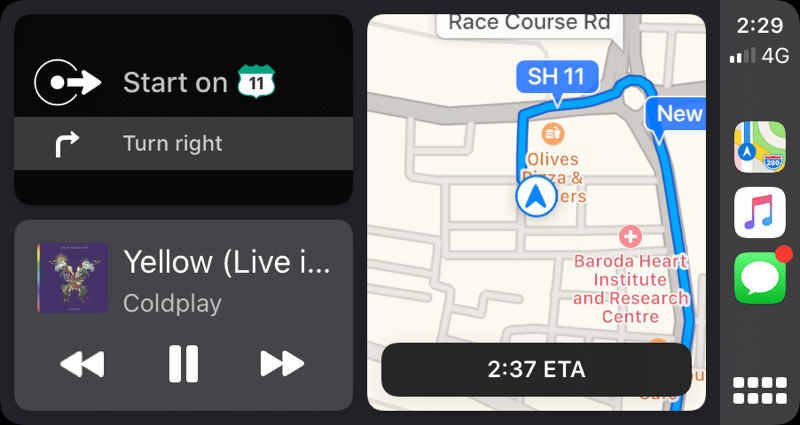
While it might not seem like it, CarPlay in iOS 13 is a huge leap forward when it comes to the user experience. The Dark mode now matches iOS 13’s UI, there’s a new Light mode to boot and the new Dashboard gives you control of Maps and Music all in one screen. Plus, screen independence is finally here. Here are all the new CarPlay features for iPhone in iOS 13 you should know about.
CarPlay in iOS 13: All The New Features
1. New Dashboard Design


The changes are apparent the minute you connect your iPhone to your car. When CarPlay starts up, you’ll now see a Dashboard UI. And it will be in the new dark mode. The Dashboard view shows Maps on one side and three different widgets on the other.

The first widget is for Apple Maps. You’ll see shortcuts to your frequent locations here. When you’re navigating, you’ll see directions here. The middle widget is for Now Playing. You’ll see the album art for the currently playing media and buttons for Play/Pause and skip. You can tap on it to open the Now Playing app.

The last widget is for Siri Suggestions. This will depend heavily on your usage. You’ll find suggestions for launching apps, initiating Siri Shortcuts and more here. In the sidebar, you’ll find the three recently used apps.
2. How to Switch to The Old Icons View


In the Dashboard view, the old Home button is gone. It is now replaced by a new icon that depicts the current Home screen view. You can tap on it to switch back to the old Icons view. Weirdly enough, the button still behaves like the Home button when you’re in an app. Tap on it to go back to the Home. Tap on it again to change the Home screen view.

You can also swipe left/right on the Dashboard to switch to the old view.
3. New Management Screen on iPhone in Settings


If you go to Settings -> General -> CarPlay, you’ll find a new Customize option. Previously, you had a virtual screen for CarPlay view that you would tap to change the app orders or to remove them. Now, when you tap on Customize, you’ll see a list of all available apps. Tap on the “-” (minus) icon to remove an app from CarPlay. To rearrange an app, tap and drag the handlebar icon.
4. Updated Settings


The Settings screen in CarPlay has also been updated.

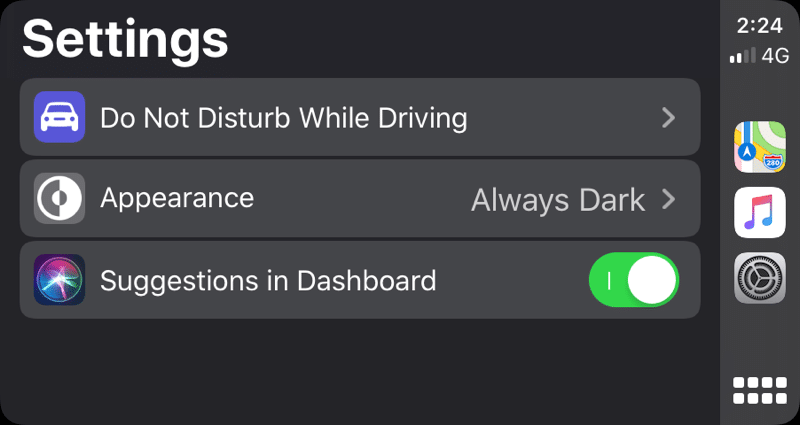
Do Not Disturb While Driving: You can now set up this feature right from CarPlay. It can be set up to automatically engage Do Not Disturb While Driving mode when you connect to CarPlay.

Automatic Dark Mode: Tap on the Appearance button and you’ll be able to switch between Automatic and Always Dark option. The Automatic option will switch between the new Light and Dark mode based on the time of the day and the ambient light in your car or your environment.

But this doesn’t always work reliably. It’s best to use the Always Dark option. The new Dark Mode theme in iOS 13 makes good use of muted colors and solid backgrounds. It’s much better on the eyes. The new Light mode can in fact be a bit too bright unless you’re in a very sunny area.

Turn off Siri Suggestions: You’ll also find the toggle to turn off Siri Suggestions here. Tap on it and the widget in the Dashboard that shows Siri Suggestions will go away.

Show Album Art: Tap on the toggle to enable/disable the Album Art for the Now Playing widget in the Dashboard.
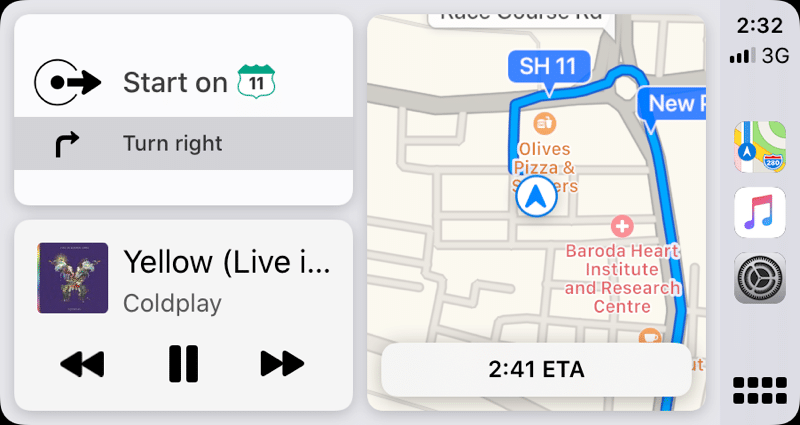
5. New Light Mode


iOS 13 and iPadOS 13 get a new dark mode. And CarPlay gets a new Light mode.
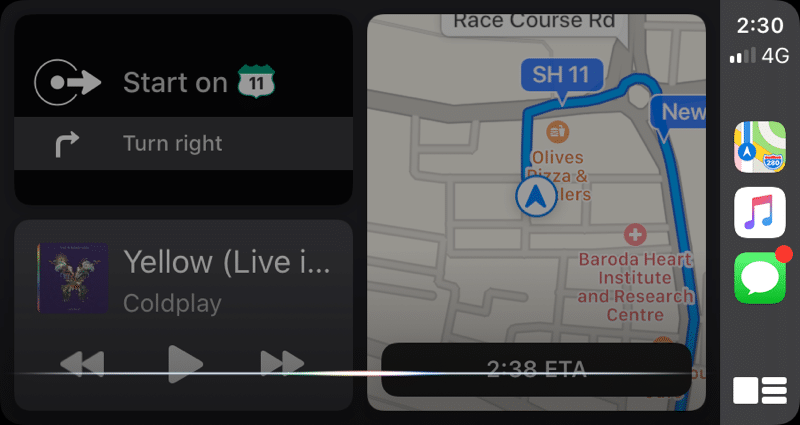
6. New Siri View Over The Screen


Siri no longer takes over the whole screen when you engage it. It now shows a slightly translucent layer on top of what you’re seeing. It works really well and we hope this feature comes to iPhone and iPad soon.
7. Screen Independence

CarPlay for iPhone finally has screen independence. Previously if your passenger took your iPhone and opened an app that wasn’t available on CarPlay, it would throw you directly to the icons home screen. This would disrupt your navigation view. Now, in iOS 13, CarPlay has screen independence. So this no longer happens.

You can open and use any app on the iPhone without affecting what’s on the iPhone’s screen. Now, a friend can take your iPhone and browse through songs on the Music app when you keep navigating on the CarPlay using Maps or any other app.
8. New Calendar App


CarPlay in iOS 13 has added a new app – Calendar. It’s a very simplified app. All you can see is the day’s events. That is all.
9. New Maps UI


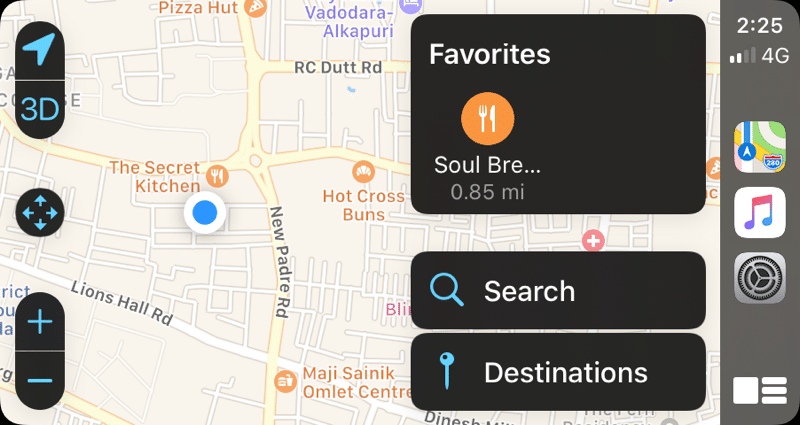
Just like iOS 13, the Maps app in CarPlay sees a big upgrade. All the new features from Maps app are here. When you open the Maps app, you’ll see shortcuts to your Favorite locations at the top. You can even browse through your Collections here.


You can search for locations, or go to a previous destination. Tap on a location to open the detailed view. From here, you can choose a different route, and start the navigation.


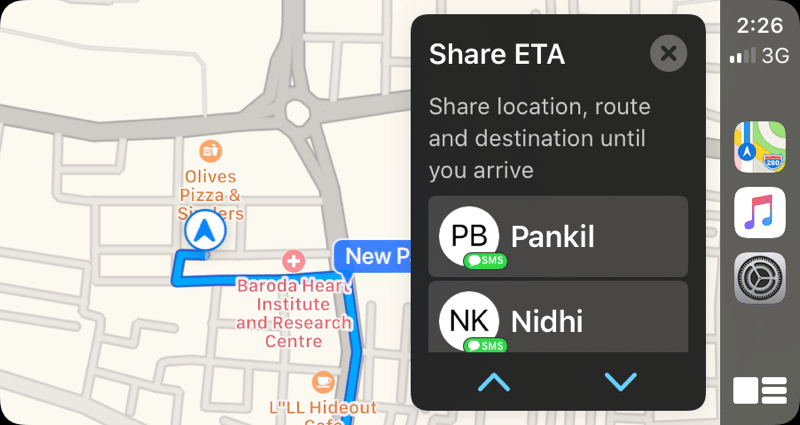
During navigation, you’ll see a new option called Share ETA. You can quickly share your ETA with a contact in Messages. You can continue monitoring your ETA after this as well.
10. New Messages View


The Messages app now opens to a list of your recent conversations. Once you tap on a conversation, Siri will start reading the latest message for you. Then you can reply to it using your voice. That part hasn’t changed.
11. Hey Siri and Always on Siri

Another big change in CarPlay? Hey Siri now works directly on the CarPlay UI. Plus, there’s support for Always On Siri. This is a change in the behavior of Siri. Previously, you’d have to wait for a second or two after hitting the Mic button on your car steering to call up Siri. Now, you can start talking as soon as you hit the button because Siri is always on in the background.

It will pick up your command as soon as you hit the button. This reduced the lag and the frustration of using Siri via your car interface.If you lost data after you updated to a new iPhone, you can always use Gihosoft iPhone Data Recovery to get the data back from the old iPhone or backup.You may also like: iphonerecovery.com


Featured Post

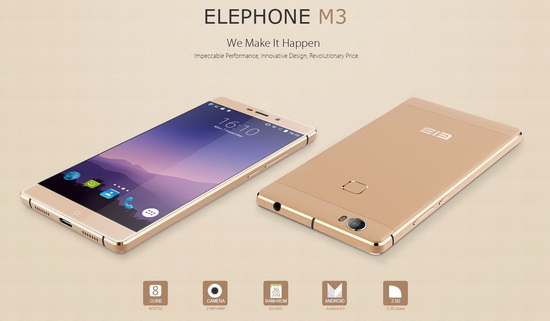
Elephone M3 News

Elephone M3 comes in two versions, both with the integration of aviation aluminum body and have Rose Gold, Champagne Gold, Smoky Grey ...